When we think about designing a child’s room, it’s easy to default to what’s cute, trendy, or on sale. But the truth is, the artwork you choose does more than fill a wall — it sets the tone for the entire room, and it determines how long that room will actually feel finished.
The difference between a space that feels styled and one that feels thrown together often comes down to a few intentional choices in the details: the shape of the piece, the texture, the palette, and how it’s layered into the room as a whole. It’s the same principle we lean on across every project, whether we’re working through what virtual interior design actually looks like or helping a client style a single room.
Here’s how we think about it.
Start With the Feeling, Not the Theme
The biggest mistake we see in kids room design is choosing artwork based on a theme (dinosaurs, unicorns, space rockets) rather than a feeling. Themes are fun, but they’re also fleeting — a child who loves dinosaurs at four may have zero interest in them at eight. When a room is built entirely around a theme, the art (and often the whole space) ages out quickly.
Instead, we recommend starting with a feeling or mood you want the room to hold: calm, playful, adventurous, soft. Art selected around a feeling tends to stay relevant far longer than art selected around a specific subject — the same principle that comes up again and again in our guide to styling a small Cape Town apartment without spending a fortune, where intentional choices matter more than sheer quantity.
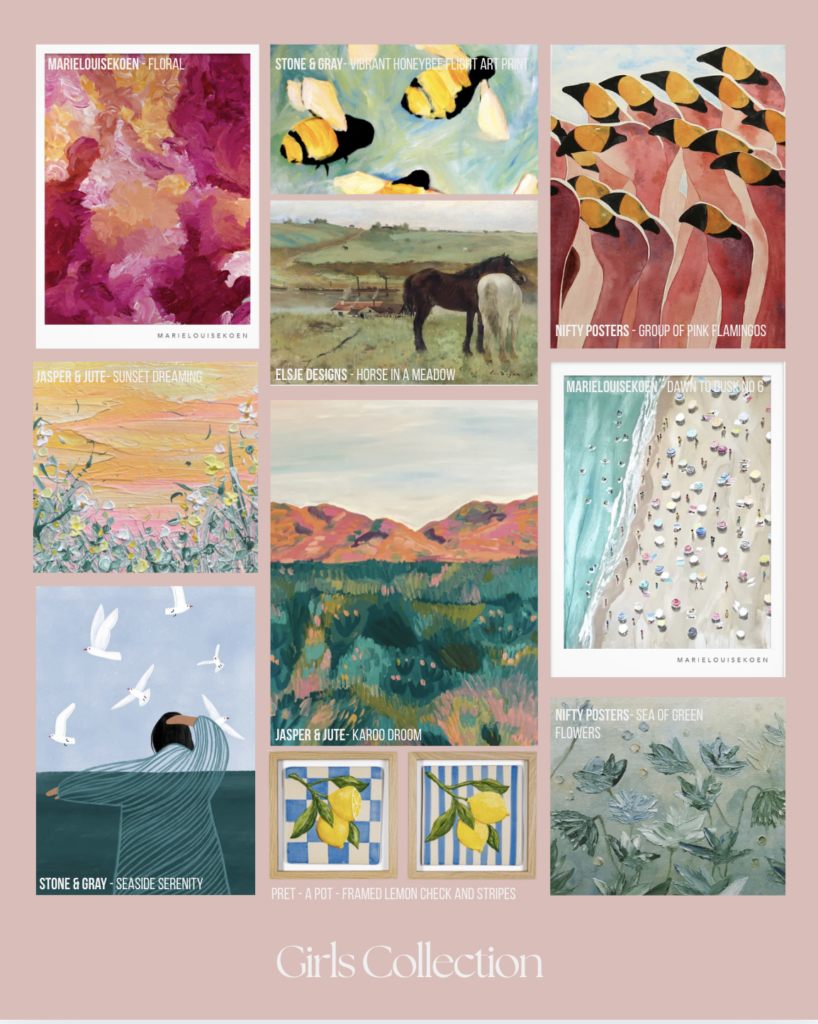
Choosing Girls Artwork
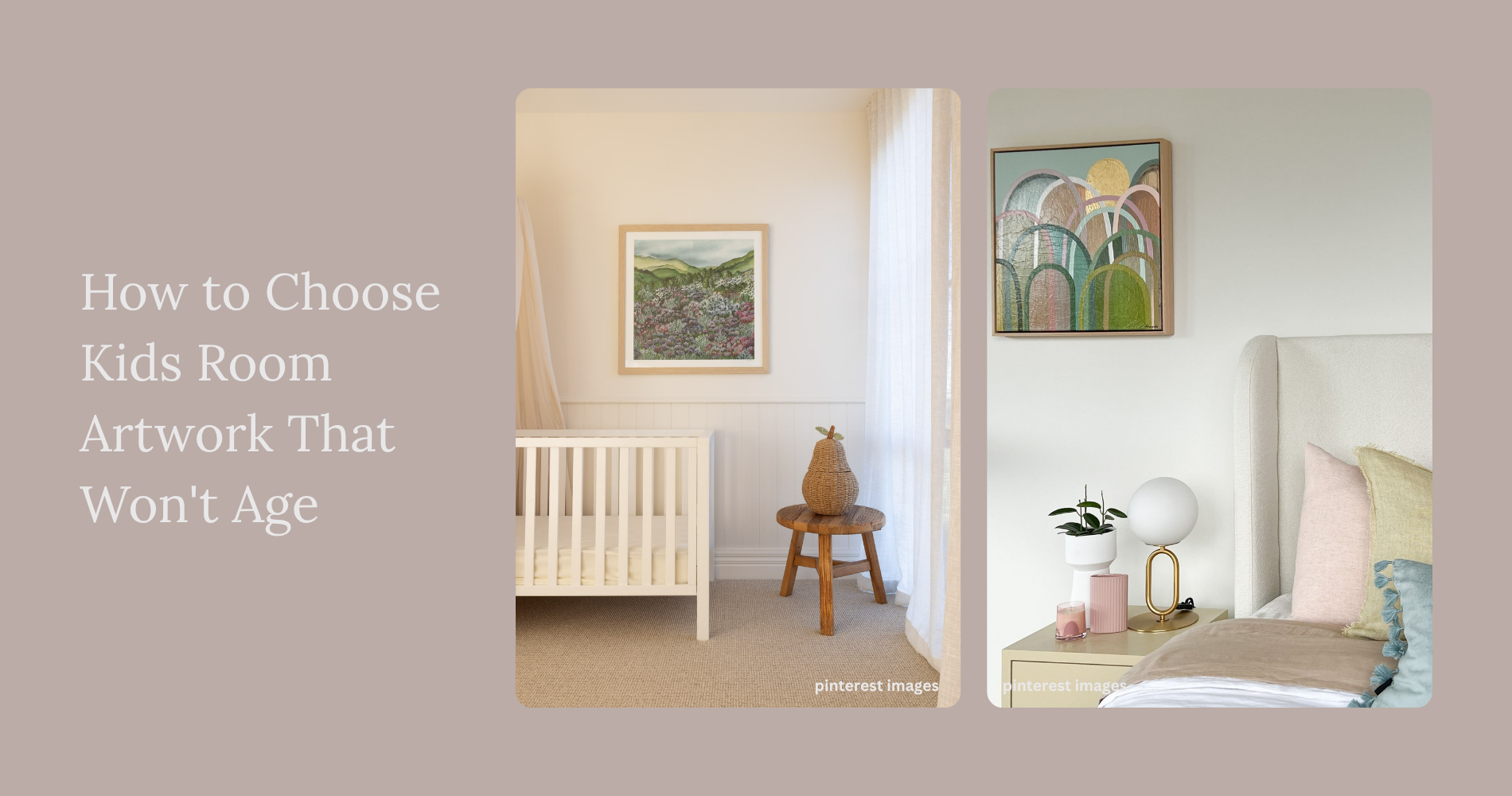
For girls spaces, we lean into pieces with movement and softness — florals, watercolor blooms, and gentle abstract shapes. Tones like blush, terracotta, and sage tend to feel warm without skewing overly “babyish” or overly juvenile.
The goal is to avoid anything too literal or character-driven. A piece that leans organic and soft will move gracefully with a child from nursery through the tween years, without ever needing to be swapped out for something more “grown up.”
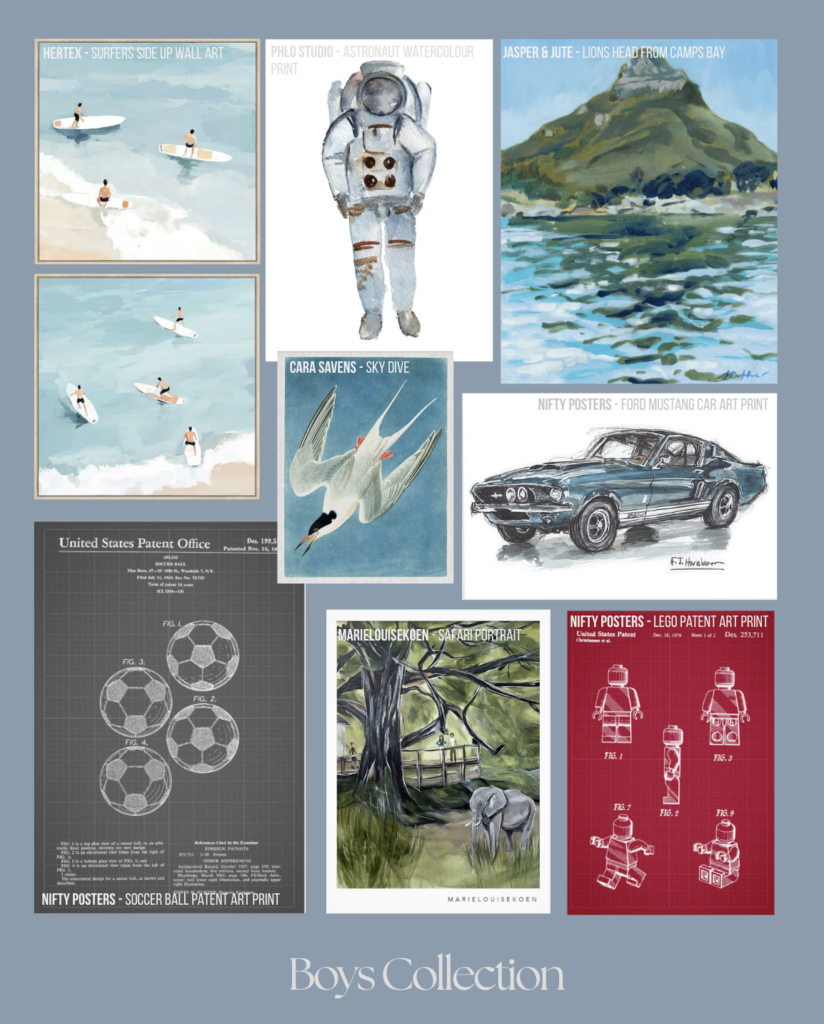
Choosing Boys Artwork
For boys spaces, we look for pieces with more structure and depth — bold linework, abstract landscapes, or geometric shapes in warm neutrals, navy, or rust. Texture plays a big role here too: raised brushstrokes or layered prints add a tactile quality that keeps a room feeling considered rather than generic.
These pieces tend to hold their own from toddlerhood all the way through the “cool teenager” years, which means less redecorating and more longevity for the investment.
The Detail That Matters Most: Texture Over Flat Prints
If there’s one principle we come back to again and again, it’s this: texture and dimension will always outlast a flat print.
A flat, printed piece — no matter how well designed — reads as “kid’s decor.” It’s tied to a moment in time, and it shows. A textured piece, on the other hand, reads as art. It has depth, subtle imperfection, and a tactile quality that a poster simply can’t replicate.
This is especially true for pieces like reeded (fluted) animal silhouettes or ceramic wall decor. A reeded rabbit or bird silhouette leans on shape rather than character — there’s no cartoon face, no theme attached, which means it doesn’t age out the way a themed print would. Ceramic and stoneware pieces carry natural variation (slight glaze pooling, subtle grain, imperfect edges) that makes a room feel intentional rather than decorated around a passing trend.
The takeaway: when selecting artwork for a child’s space, choose shape and texture over character and color. It’s the small decision that lets a room grow with your child, rather than needing to be redone every time they outgrow a phase.
Bringing It All Together
Elevating a child’s space isn’t about spending more — it’s about choosing with intention. A few well-considered pieces, selected for their texture, tone, and timelessness, will do more for a room than a wall full of themed prints ever could.
The result is a space that feels as good in five years as it does today.
If you’d love some guidance putting these pieces together into a room that actually flows, our Online Home Refresh service is a great place to start — no site visits required.
Taryn | Elevating Spaces