If your child’s playroom feels like it explodes five minutes after you tidy it, you’re not alone. Most playrooms aren’t actually designed to be easy to keep organised — they’re just filled with toys and hope for the best.
The good news? Organising a kids playroom doesn’t require expensive storage systems or a Pinterest-perfect setup. It requires a plan that works with how kids actually play.
Here’s how to organise a playroom so it stays functional, calm, and easy to reset — even on busy days.
Start With Less (Yes, Really)
The biggest mistake in kids’ room organisation is trying to store too much at once. When every toy is accessible, nothing has a home — and mess builds fast.
Before buying new storage, do a simple edit:
- Keep out toys your child actively plays with
- Store or rotate toys that aren’t being used
- Donate or pack away broken or outgrown items
Toy rotation is especially helpful in small playrooms. Fewer toys out means more focus, better play, and easier clean ups.
Zone the Playroom by Activity
A well organised playroom is divided into zones, not just storage.
Think in categories:
- A reading corner with books and cushions
- A creative zone for art supplies
- An open floor area for building or imaginative play
- A storage zone for puzzles, games, or cars
When toys are grouped by activity, kids know where things belong — and tidying up becomes more intuitive.
Use Open Storage for Everyday Toys
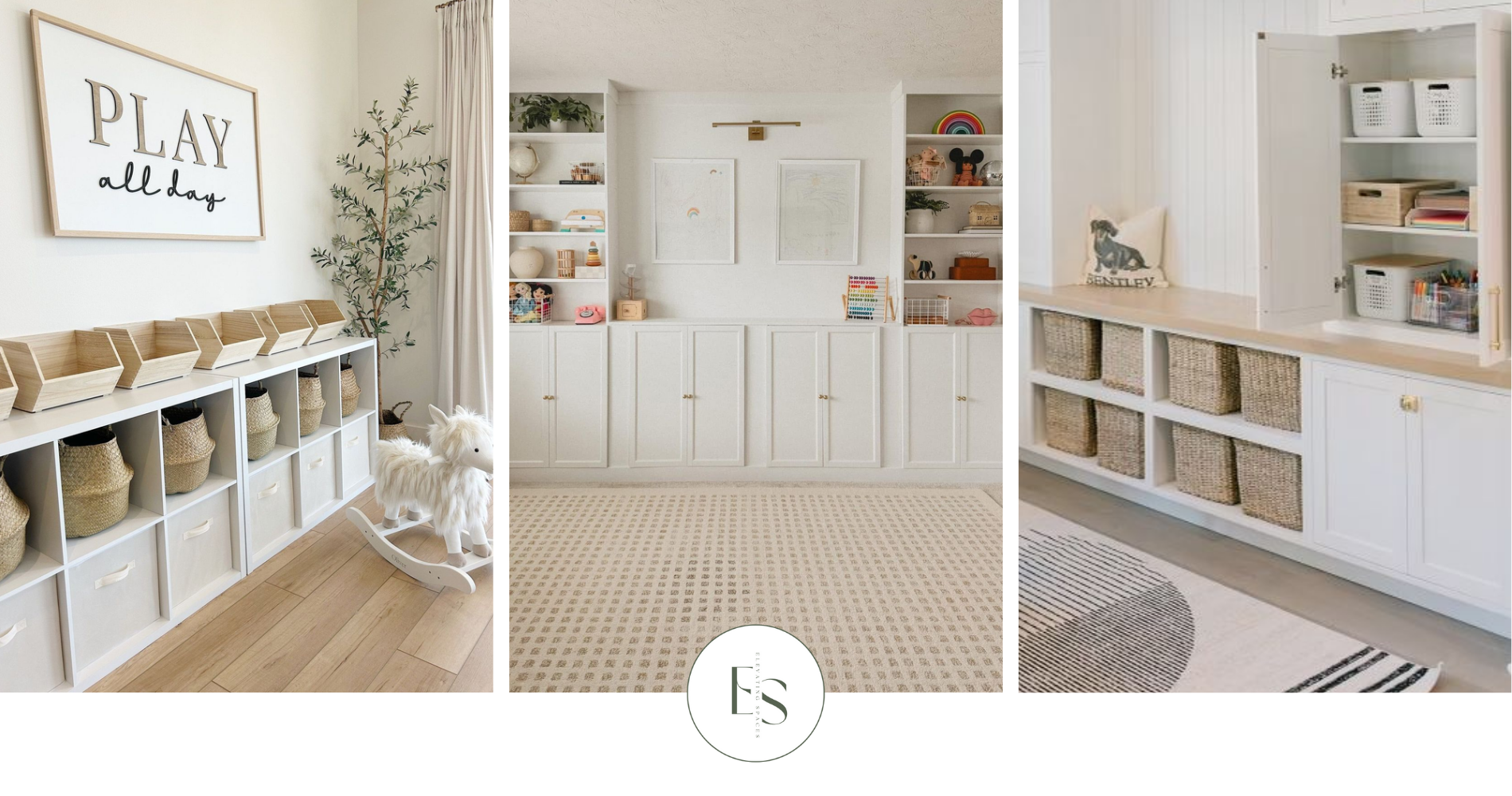
Clear bins, baskets, and low shelves are your best friend when organising a playroom. If kids can see and reach their toys, they’re more likely to use — and put them away.
Label bins with words or pictures depending on your child’s age. Keep labels simple and consistent so everything has a clear “home.”
Closed cupboards can work for overflow storage, but daily toys should be easy to access without adult help.
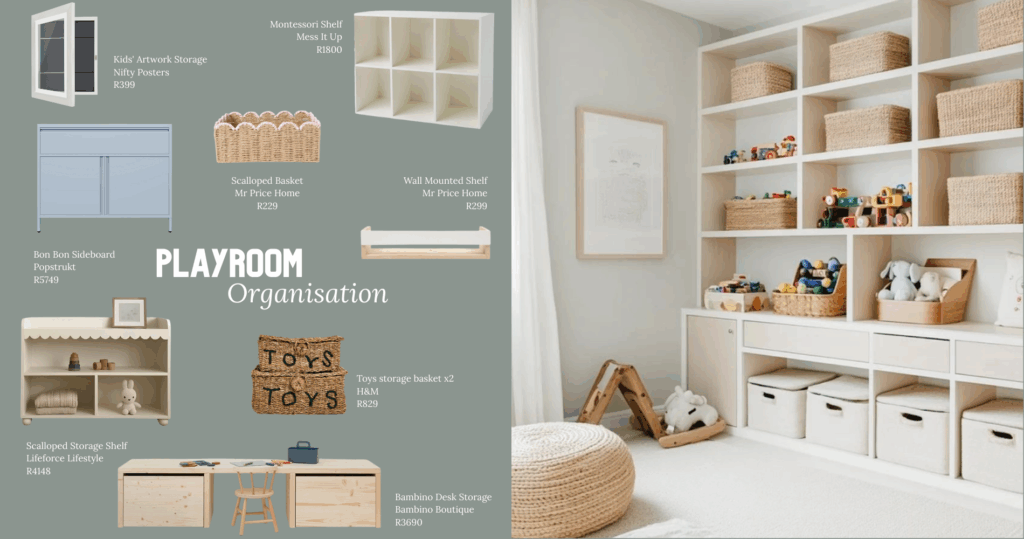
Choose Storage That Grows With Them
Kids’ rooms change fast. What works at age three won’t work at age seven.
Instead of themed storage, opt for:
- Neutral baskets
- Simple shelving
- Stackable bins
These can transition easily from toys to books, crafts, or school supplies later on — saving you from constant redesigns.
Keep the Floor as Clear as Possible
One of the easiest ways to make a playroom feel calmer is to free up floor space. Avoid scattering storage everywhere and instead anchor it along walls.
This gives kids room to play while making the space feel less chaotic — especially in smaller homes or shared playrooms.
Make Tidying Up Part of the Design
A playroom should be easy to reset in five minutes, not thirty.
If putting toys away feels overwhelming, the system is too complicated. Fewer categories, bigger baskets, and flexible storage always work better than overly detailed solutions.
The goal isn’t perfection — it’s a space that supports everyday life.
A Calm Playroom Is Still a Playroom
An organised kids’ room doesn’t mean sterile or boring. You can still add personality with:
- Soft rugs
- Wall art or decals
- Warm lighting
- Pops of colour through toys or books
When storage does the heavy lifting, the room naturally feels calmer — even during play.
Final Thoughts
Organising a playroom isn’t about controlling mess. It’s about creating a space where kids can play freely and parents can breathe a little easier.
A thoughtful layout, realistic storage, and a clear plan make all the difference — especially in small spaces.
If you’re feeling stuck or overwhelmed, sometimes an outside perspective helps.
If you’d like help creating a playroom that works for your child and your home, I offer online kids’ room refreshes designed to be practical, affordable, and easy to maintain. You don’t need more storage — you need a plan.
— Taryn | Elevating Spaces